Bitcoin vs Bitcoin Cash is a captivating debate that has intrigued cryptocurrency enthusiasts since the latter’s inception. As two prominent players in the digital currency landscape, they share a common origin but diverge in purpose and functionality. Understanding the nuances between these two cryptocurrencies not only sheds light on their individual paths but also offers insights into the broader evolution of the digital economy.
Bitcoin, launched in 2009, pioneered the crypto space, while Bitcoin Cash emerged in 2017 as a response to scalability issues with the original Bitcoin. Each has its unique set of goals, technical specifications, and community philosophies, which contribute to their varying adoption rates and market performances.
Introduction to Bitcoin and Bitcoin Cash
Bitcoin, created in 2009 by an anonymous entity known as Satoshi Nakamoto, marked the dawn of decentralized digital currencies. Its revolutionary approach to financial transactions aimed to eliminate intermediaries, allowing users to transact peer-to-peer over the blockchain. In contrast, Bitcoin Cash emerged in August 2017 from a hard fork of the original Bitcoin network, primarily to address scalability issues and facilitate faster transaction processing.The fundamental differences between Bitcoin and Bitcoin Cash lie in their transaction capabilities and intended use cases.
Bitcoin, designed primarily as a store of value and a hedge against inflation, emphasizes security and decentralization. Bitcoin Cash, however, focuses on enabling low-fee transactions, making it more suited for daily transactions and small payments within the digital economy.
Origins and Goals
The creation of Bitcoin was a pivotal moment in the financial world, as it introduced a new paradigm for currency. As the first cryptocurrency, Bitcoin aimed to provide a decentralized currency that operated independently of any central authority. Its primary goal is to serve as a digital gold, storing value and hedging against traditional financial systems.In contrast, Bitcoin Cash was born out of the need for a more scalable solution.
The developers sought to increase the block size limit from Bitcoin’s 1MB to 8MB initially, allowing for more transactions to be processed per block, thus reducing congestion and costs. The goal of Bitcoin Cash is to become a practical medium of exchange for everyday transactions, focusing on user accessibility and efficiency.
“Bitcoin is digital gold; Bitcoin Cash is digital cash.”
Both cryptocurrencies have distinct roles within the digital economy, appealing to different user bases. Bitcoin’s value proposition is rooted in its scarcity and security, while Bitcoin Cash places emphasis on usability in everyday transactions, making it an appealing option for those looking to utilize cryptocurrency for regular purchases.
Technical Differences
The technical specifications of Bitcoin and Bitcoin Cash showcase their distinct approaches to blockchain technology, scalability, and transaction processing. Understanding these differences is crucial for potential users and investors who wish to navigate the cryptocurrency landscape effectively. This section will delve into key technical aspects that set these two cryptocurrencies apart.
Block Size and Transaction Speed
One of the most notable technical differences between Bitcoin and Bitcoin Cash is their block size. Bitcoin has a maximum block size of 1 MB, while Bitcoin Cash significantly increased this limit to 32 MB. This change allows Bitcoin Cash to process more transactions per block, enhancing its scalability and transaction speed. The implications of these block sizes are substantial.
A larger block size means that Bitcoin Cash can handle a higher volume of transactions without experiencing congestion, which is a common issue with Bitcoin during peak times. Therefore, users of Bitcoin Cash often experience faster transaction confirmations compared to those using Bitcoin.
Hashing Algorithms and Security
Both Bitcoin and Bitcoin Cash utilize the SHA-256 hashing algorithm. This algorithm is known for its security and resistance against collisions and pre-image attacks, making it a reliable choice for both cryptocurrencies. However, the differences in network capacity and transaction volume can influence the security dynamics. With a larger block size and increased transaction throughput, Bitcoin Cash can potentially lead to more frequent blocks being mined, which may enhance its overall security against certain types of attacks.
Comparison of Technical Metrics
To better understand the technical differences between Bitcoin and Bitcoin Cash, the following table summarizes key metrics such as transaction fees, block times, and block sizes.
| Metric |
Bitcoin |
Bitcoin Cash |
| Block Size |
1 MB |
32 MB |
| Average Block Time |
10 minutes |
10 minutes |
| Transaction Speed |
3-7 transactions per second |
up to 61 transactions per second |
| Average Transaction Fee |
$1.00 – $2.00 |
$0.001 – $0.05 |
The metrics in this table highlight the differences in transaction processing capabilities and costs, which can affect user experience significantly. With lower fees and faster processing times, Bitcoin Cash positions itself as a more efficient alternative for everyday transactions.
Use Cases and Adoption
Bitcoin and Bitcoin Cash have carved distinct niches within the cryptocurrency landscape, each with specific use cases and varying levels of adoption among merchants and consumers. Their differing philosophies and technical attributes have led to unique applications in the real world.Real-world examples illustrate how Bitcoin is primarily viewed as a store of value and digital gold, while Bitcoin Cash aims to facilitate everyday transactions with lower fees.
The adoption rate for each cryptocurrency varies significantly, influenced by the nature of their respective use cases.
Real-World Use Cases
Both Bitcoin and Bitcoin Cash have found applications in various sectors, showcasing their utility beyond mere speculation. Here are some notable examples:
Bitcoin
Used for online purchases at major retailers like Microsoft and Overstock.
Accepted by financial service providers for cross-border payments, such as PayPal allowing users to buy, hold, and sell Bitcoin.
Enables investment opportunities through various financial products like Bitcoin ETFs.
Bitcoin Cash
Facilitates low-cost transactions for everyday purchases, such as food and beverages at select cafes and restaurants.
Powers microtransactions for digital content, including tips on platforms like Twitch.
Provides a payment solution for remittances in regions with limited banking access, enabling peer-to-peer transfers.
Adoption Among Merchants and Consumers
The level of adoption for Bitcoin and Bitcoin Cash varies across different merchant segments and consumer bases. Bitcoin has seen broader acceptance, particularly in investment-focused and high-value transactions, whereas Bitcoin Cash is gaining ground in sectors that prioritize low transaction fees.Many businesses accept one or both cryptocurrencies, impacting their adoption rates. Below is an overview of industries where each cryptocurrency is making strides:
Industries Embracing Bitcoin and Bitcoin Cash
Understanding the sectors that are increasingly adopting Bitcoin and Bitcoin Cash helps illustrate their respective trajectories.
Bitcoin
E-commerce
Online retailers, particularly those in tech and luxury goods, increasingly accept Bitcoin due to its perceived value and security.
Finance
Institutional investment firms and hedge funds are integrating Bitcoin into their portfolios as a hedge against inflation.
Travel and Hospitality
Companies like Expedia and Travala allow customers to book flights and accommodations using Bitcoin.
Bitcoin Cash
Retail
Local businesses, particularly in areas with high cryptocurrency interest, accept Bitcoin Cash for everyday transactions.
Gaming
Online gaming platforms accept Bitcoin Cash for in-game purchases, attracting a younger demographic.
Food Services
Restaurants and cafes are beginning to adopt Bitcoin Cash for quick service transactions, promoting its use in high-volume environments.
Both Bitcoin and Bitcoin Cash showcase unique use cases and adoption patterns, reflecting the diverse needs and preferences of users and merchants alike.
Community and Development
The communities behind Bitcoin and Bitcoin Cash play a crucial role in shaping their development, guiding philosophies, and overall direction. Both cryptocurrencies have passionate supporters and active development teams that contribute to their ongoing evolution. Understanding these communities and their differing philosophies offers insight into why Bitcoin and Bitcoin Cash have taken distinct paths since their respective forks.The Bitcoin community is known for its emphasis on decentralization and security, often prioritizing these principles over scalability.
Conversely, the Bitcoin Cash community advocates for increased transaction capacity, believing this approach will drive wider adoption and practical use of cryptocurrencies. Both communities have cultivated their own identities, largely influenced by their respective philosophies regarding the future of digital currencies.
Community Support and Development Teams
Each cryptocurrency has its own dedicated development teams, contributing to the ecosystem’s growth and robustness. The Bitcoin development community is primarily composed of volunteers, including both independent developers and those affiliated with organizations like Blockstream. This community emphasizes rigorous testing, security audits, and consensus-driven development. On the other hand, the Bitcoin Cash ecosystem includes developers from different organizations such as Bitcoin Unlimited and Bitcoin ABC.
These teams actively push for protocol upgrades aimed at improving transaction speed and reducing fees. The Bitcoin Cash community is generally more open to changes that can enhance scalability, reflecting a more flexible approach to development.
Philosophies on Scalability and Decentralization
The philosophy of the Bitcoin community centers around maintaining a high level of decentralization. This focus often leads to slower development cycles as major changes undergo extensive scrutiny and testing. The community believes that a more decentralized network enhances security and aligns with the original vision of Bitcoin as a peer-to-peer electronic cash system.In contrast, the Bitcoin Cash community prioritizes scalability, advocating for larger block sizes to accommodate more transactions per second.
This approach reflects their belief that increasing capacity is essential for promoting everyday transaction use of cryptocurrencies. The Bitcoin Cash philosophy acknowledges the trade-off between decentralization and scalability, suggesting that some degree of compromise is necessary to foster growth and usability.
Timeline of Significant Updates and Forks
The evolution of Bitcoin and Bitcoin Cash includes several significant events that shaped their paths. Understanding these milestones provides context to their current status and community sentiments.
| Year |
Bitcoin |
Bitcoin Cash |
| 2009 |
Launch of Bitcoin |
N/A |
| 2017 |
Scaling debates lead to increased attention on transaction fees |
Bitcoin Cash forks from Bitcoin on August 1, 2017 |
| 2018 |
Introduction of Segregated Witness (SegWit) |
Bitcoin Cash increases block size limit to 32MB |
| 2020 |
Taproot proposal introduced, aiming to improve privacy and smart contracts |
Bitcoin Cash undergoes a hard fork, creating Bitcoin Cash ABC and Bitcoin Cash Node |
| 2021 |
Taproot activated in November, enabling more complex transactions |
Bitcoin Cash continues to focus on increasing adoption through lower fees |
Market Performance
The performance of Bitcoin and Bitcoin Cash in the market has been a subject of extensive analysis, given their distinct characteristics and the varying impacts these have had on their price movements. This section delves into their historical price trends, market capitalizations, and trading volumes over the past few years, providing a clearer picture of how these two cryptocurrencies stack up against each other.
Historical Price Movements
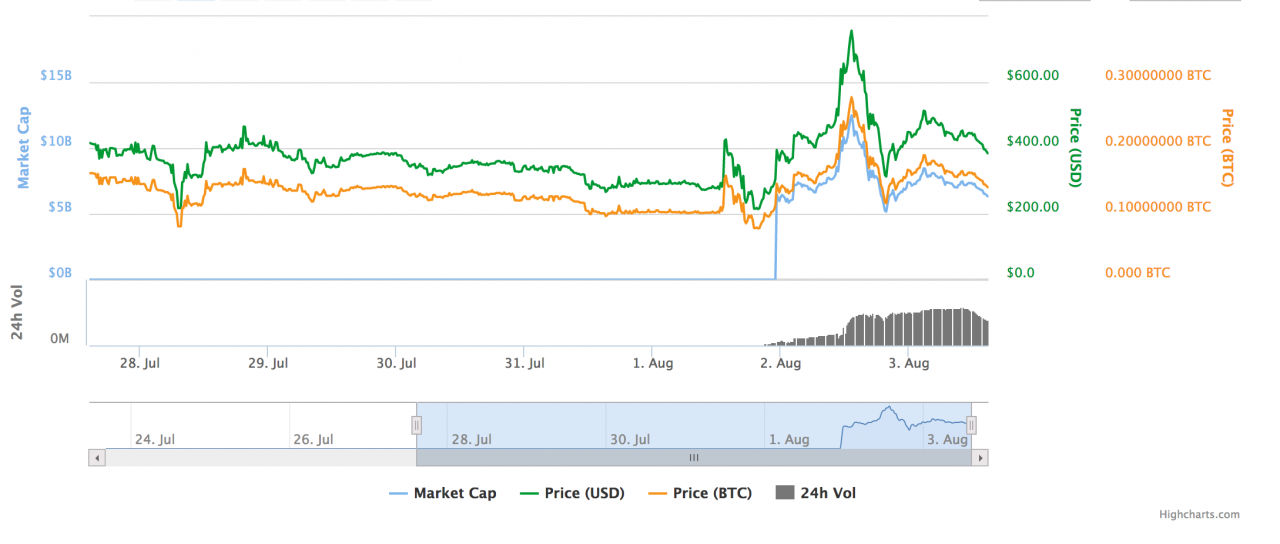
Bitcoin (BTC) has experienced significant price fluctuations since its inception in 2009. In contrast, Bitcoin Cash (BCH), which forked from Bitcoin in August 2017, has displayed its own unique price trajectory. Over the years, Bitcoin has seen its price reach an all-time high of nearly $64,000 in April 2021, while Bitcoin Cash’s peak was approximately $4,000 shortly after its launch.The following table Artikels the price trends of both cryptocurrencies over selected milestones:
| Date |
Bitcoin (BTC) Price |
Bitcoin Cash (BCH) Price |
| August 2017 |
$2,900 |
$400 |
| December 2017 |
$19,500 |
$4,000 |
| April 2021 |
$64,000 |
$1,500 |
| October 2023 |
$35,000 |
$250 |
Market Capitalization and Trading Volumes
Market capitalization serves as a critical indicator of a cryptocurrency’s overall market value, calculated by multiplying the current price by the total supply of coins. As of October 2023, Bitcoin remains the dominant player in the cryptocurrency market with a market capitalization exceeding $600 billion. In contrast, Bitcoin Cash has struggled to maintain a significant market cap, currently hovering around $5 billion.The trading volumes of these cryptocurrencies also tell a compelling story.
Bitcoin regularly sees daily trading volumes surpassing $25 billion, demonstrating its widespread acceptance and liquidity. In comparison, Bitcoin Cash’s daily trading volume has been much lower, often not exceeding $500 million, reflecting its lesser adoption and trading activity.A summary of the market performance metrics is as follows:
| Metric |
Bitcoin (BTC) |
Bitcoin Cash (BCH) |
| Market Capitalization (Oct 2023) |
$600 billion |
$5 billion |
| Average Daily Trading Volume |
$25 billion |
$500 million |
The market performance of Bitcoin and Bitcoin Cash illustrates the broader narratives surrounding these cryptocurrencies. Bitcoin’s established position, driven by its brand recognition and community support, contrasts sharply with Bitcoin Cash’s ongoing struggle for relevance in a rapidly evolving market. The analysis of these trends provides valuable insights for potential investors and enthusiasts alike.
Regulatory Environment
The regulatory landscape surrounding Bitcoin and Bitcoin Cash remains complex and ever-evolving. With varying approaches taken by countries, these cryptocurrencies face distinct challenges that impact their adoption and usability. Understanding the regulatory environment is crucial for users and investors alike, as it can influence market dynamics and public perception.Regulatory challenges differ significantly across jurisdictions, with some countries embracing cryptocurrencies while others impose strict regulations or outright bans.
In the United States, for example, the Securities and Exchange Commission (SEC) has been active in providing guidelines on what constitutes a security, which directly affects how cryptocurrencies are classified and traded. Similarly, countries like China have imposed strict regulations on cryptocurrency trading and mining, leading to significant market reactions.
Challenges in Different Jurisdictions
The challenges faced by Bitcoin and Bitcoin Cash can be attributed to the regulatory stance adopted by different governments. The following points highlight key factors influencing the regulatory environment:
- Legal Classification: Bitcoin and Bitcoin Cash are often categorized differently in various jurisdictions, affecting their legality and the regulations applied to them. For instance, Japan recognizes Bitcoin as legal tender, while in some regions, it is deemed a commodity or financial asset.
- Taxation Policies: The approach to taxation on cryptocurrency transactions varies significantly, influencing trading behavior and investment. Countries like Germany treat Bitcoin as a currency, thus subjecting it to different tax rules compared to those that classify it as property.
- Compliance Requirements: Regulatory bodies may impose stringent Know Your Customer (KYC) and Anti-Money Laundering (AML) regulations, which can complicate the operational framework for exchanges dealing in Bitcoin and Bitcoin Cash.
- Government Bans: In nations such as India and China, outright bans on cryptocurrency trading and mining have led to market fluctuations and uncertainty, impacting the adoption rates of Bitcoin and Bitcoin Cash.
Impact of Government Policies on Adoption
Government policies play a crucial role in shaping the adoption landscape for cryptocurrencies. Supportive regulatory measures can lead to increased acceptance and integration into the financial system, while restrictive policies can deter usage. For instance, when El Salvador adopted Bitcoin as legal tender, it sparked interest and encouraged other countries to explore similar paths. Conversely, negative news regarding regulatory crackdowns can lead to sharp declines in market prices for both Bitcoin and Bitcoin Cash.Market participants often react swiftly to regulatory news, reflecting the inherent volatility in the cryptocurrency space.
The announcement of new regulations or enforcement actions can lead to significant price fluctuations, as seen when the SEC announced investigations into major exchanges. Such news tends to create uncertainty, prompting traders and investors to reassess their positions.
“Regulatory clarity can be a double-edged sword; while it may encourage broader adoption, excessive regulation risks stifling innovation.”
Future Outlook
As the cryptocurrency landscape continues to evolve, both Bitcoin and Bitcoin Cash are poised at critical junctures that could redefine their paths. Current trends are indicating that each cryptocurrency might capitalize on distinct user bases and applications, while also contending with similar challenges in scalability and regulatory scrutiny. The future developments for these digital currencies will likely be shaped by technological advancements, community initiatives, and broader market dynamics.
Emerging technologies such as layer-2 solutions, decentralized finance (DeFi), and blockchain interoperability may significantly influence the future trajectories of Bitcoin and Bitcoin Cash. For instance, Bitcoin is actively exploring the Lightning Network to enhance transaction speeds and lower fees, while Bitcoin Cash continues to focus on simplicity and cost-effectiveness for everyday transactions.
Upcoming Events and Forks Impacting the Market
Understanding upcoming events and potential forks is crucial for investors and users alike, as these can create fluctuations in market sentiment and affect pricing. Below is a list of notable events and forks that could shape the future landscape of both cryptocurrencies:
- Bitcoin Halving (2024): Scheduled for May 2024, this event will reduce the block reward from 6.25 to 3.125 BTC, potentially leading to increased scarcity and price volatility.
- Bitcoin Cash Upgrades: The next scheduled upgrade for Bitcoin Cash is set for November 2023, which may introduce significant changes in protocol, impacting transaction efficiency.
- Emerging Layer-2 Solutions: Continued development on Bitcoin’s Lightning Network and Bitcoin Cash’s Simple Ledger Protocol (SLP) could enhance their usability for microtransactions.
- Institutional Adoption Events: Conferences and summits focusing on cryptocurrency adoption, such as Bitcoin Miami 2024, may lead to increased interest and investment in both currencies.
- Regulatory Announcements: Upcoming legislation regarding cryptocurrency may define operational boundaries for both Bitcoin and Bitcoin Cash, influencing market confidence.
Adoption by institutional investors and regulatory clarity are pivotal to the future success of both Bitcoin and Bitcoin Cash.
End of Discussion
In summary, the comparison between Bitcoin and Bitcoin Cash reveals the complexities of the cryptocurrency world, from their foundational differences to their respective market dynamics. As both cryptocurrencies continue to evolve, their future will depend on technological advancements, community support, and regulatory developments. Staying informed about these factors will help investors and enthusiasts navigate the exciting yet unpredictable landscape of digital currencies.
Popular Questions
What is the main difference between Bitcoin and Bitcoin Cash?
The main difference lies in their block size; Bitcoin Cash has a larger block size which allows for more transactions to be processed at once.
Which cryptocurrency has higher transaction fees?
Generally, Bitcoin tends to have higher transaction fees compared to Bitcoin Cash due to its limited block size and higher demand.
Can Bitcoin Cash be used for everyday purchases?
Yes, Bitcoin Cash is designed to facilitate everyday transactions, making it more suitable for small purchases compared to Bitcoin.
How do the communities of Bitcoin and Bitcoin Cash differ?
The Bitcoin community prioritizes decentralization and security, while the Bitcoin Cash community emphasizes scalability and transaction efficiency.
What future events could impact Bitcoin and Bitcoin Cash?
Upcoming forks, regulatory changes, and technological advancements could significantly influence the market dynamics of both cryptocurrencies.